
Science and Technology
Chile can achieve greater equity in the health system without losing efficiency
Wei Xiong, an academic at the School of Economics and Business at Universidad de los Andes, proposes the creation of a healthcare system similar to that of Singapore, combining a strong public system - which covers the basic medical needs of all citizens - with a private system, which offers more comfortable options for those who wish to pay for additional service.
Chilean innovation detects dust produced by northern Chile's desert climate and pollution to optimize solar plant performance
Gustavo Funes, an academic from the School of Engineering and Applied Sciences, was awarded a Fondef Idea R&D grant to develop the project "Detection of dust deposition over solar panels using single pixel detection."
Project developing a tool to optimize the integration of AI models in devices with low computational power, memory, and space obtains a Fondecyt Initiaton grant.
Jorge Gómez, an academic from the School of Engineering and Applied Sciences, leads research that optimizes the integration of artificial intelligence models in devices close to the end user, improving their efficiency and reliability.
Efficient allocation of cargo space seeks to solve logistics problems at port terminals
Rosa González, an academic at the University's School of Engineering and Applied Sciences, is developing a system that improves the allocation of space and cargo transfer times for cargo ships.
Consumers to evaluate the quality of content on streaming platforms
The academic from the School of Business and Economics, David Kimber, will discuss consumer behavior and its impact on the industry.
Geographic location impacts innovation and growth of small and medium-sized enterprises in Chile
This research seeks to contribute to the design of public policies that generate greater resilience for smaller companies, promote job creation and reduce the digital divide, among others.
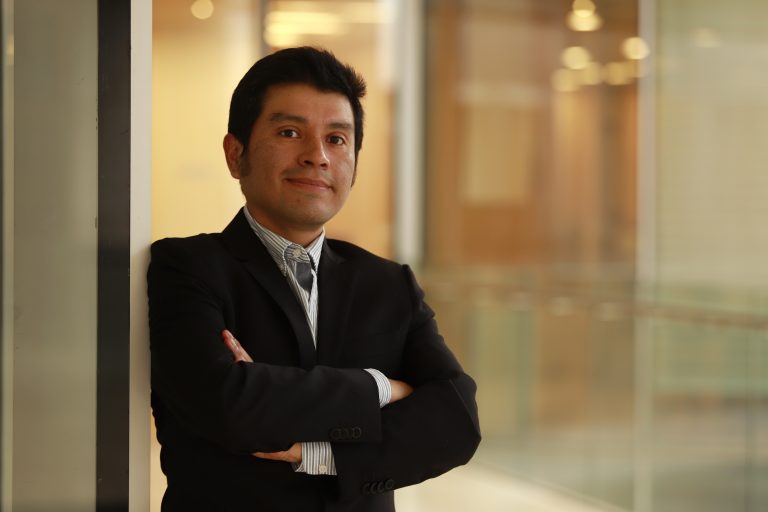
Chilean scientists develop a new test to diagnose hypertension
An interdisciplinary team, led by researcher from the School of Engineering and Applied Sciences, José Manuel Saavedra, is developing generative models that allow reconstructing CT images with less than 50% of radiation, without losing diagnostic quality.


"In the last five years we have had an increase of more than 20% in the number of research academics."
Patrick Horn, dean of the School of Engineering and Applied Sciences, highlights the development of high-level academic and scientific projects among universities, industry, and government to offer real solutions to Chile's challenges.
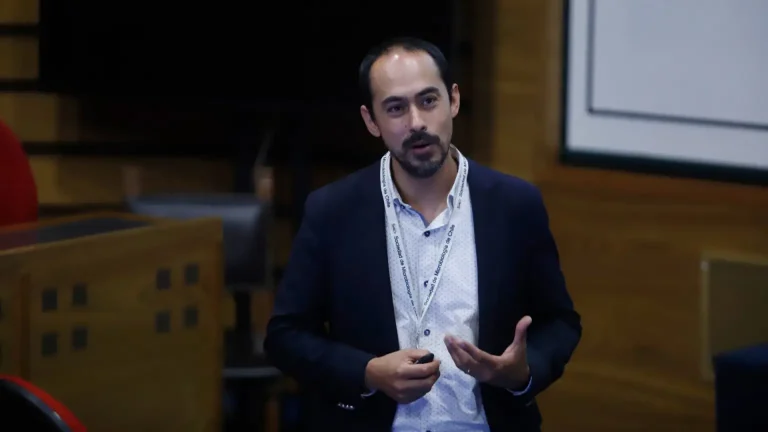
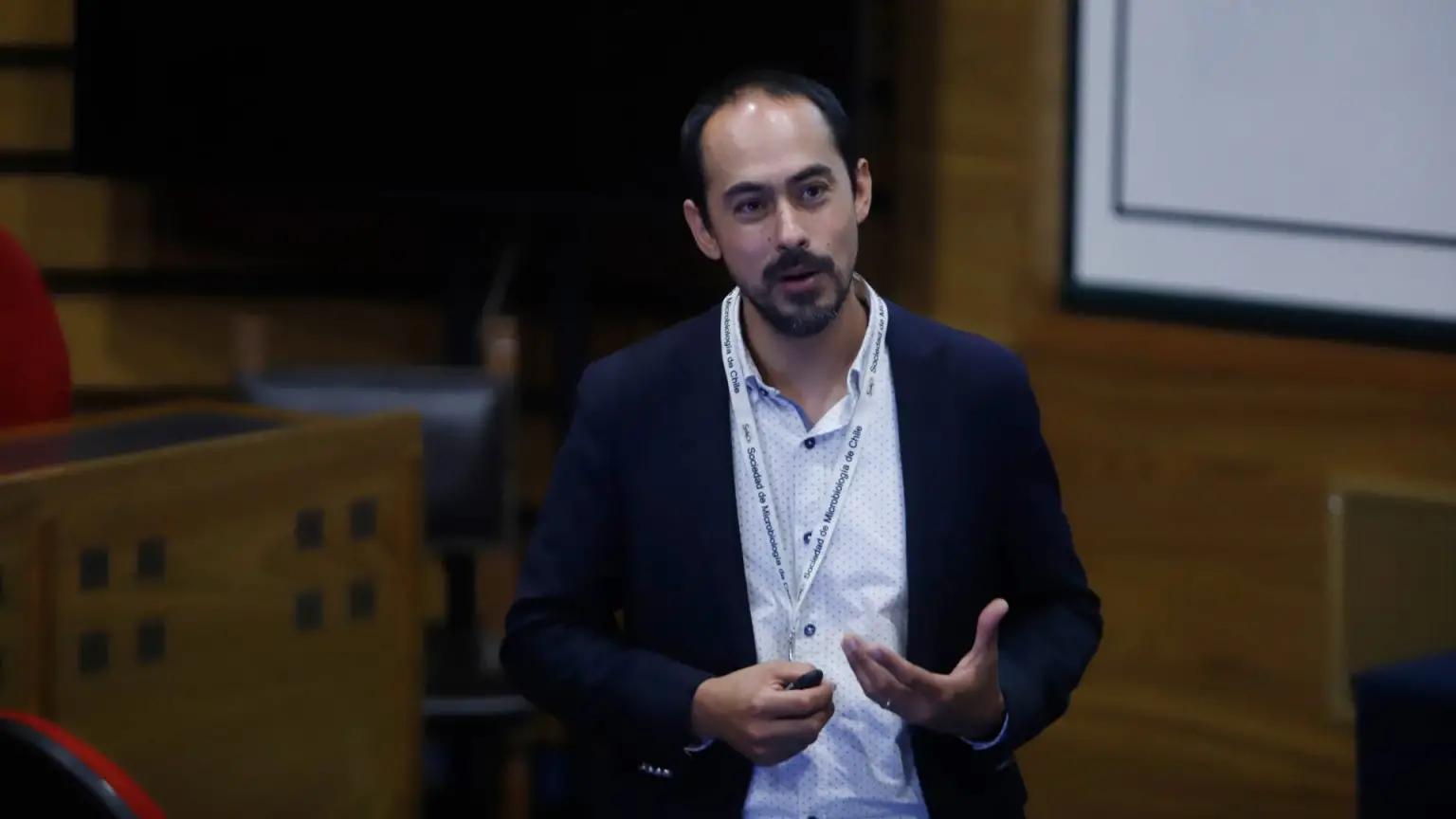
Indoor air biopurifier uses a biological system to break down pollutant molecules
The system improves air quality in homes, schools, and offices, addressing an issue that affects both health and productivity in the country.
Chilean researchers seek a second life for lithium batteries in electric cars
AI will perform diagnostics of these parts to reuse them and contribute to energy sustainability.