
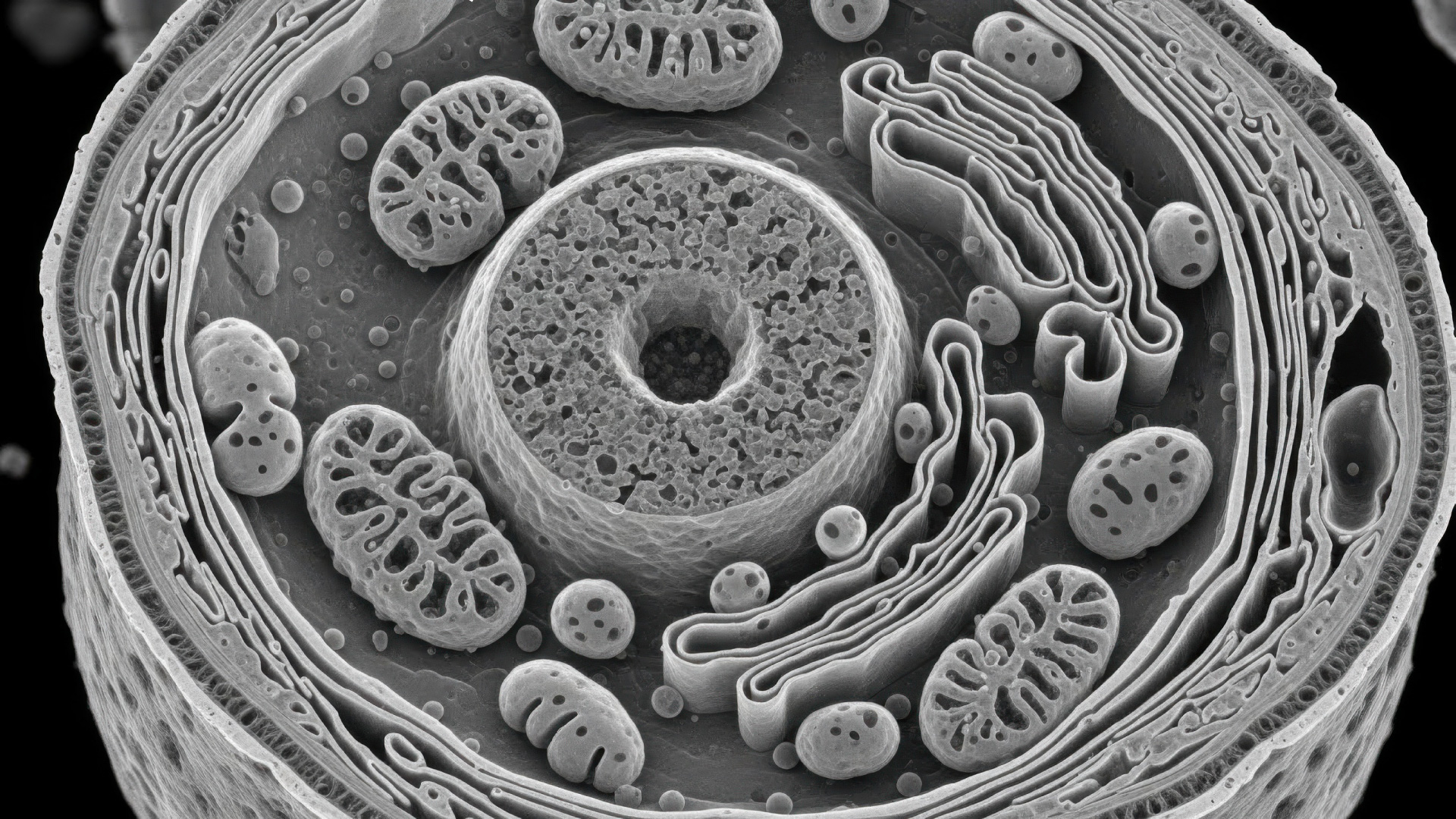
Research by Nicolás Georges and Camila Fuentes shows that melanoma cells release damaged mitochondria into their surroundings and the bloodstream, a process associated with tumor progression.
Nicolás Georges, a Ph.D. student in Biomedicine and a researcher in the Nano-Regenerative Medicine program at the Center for Biomedical Research and Innovation (CiiB), along with Camila Fuentes and Francisca Alcayaga, published a study in the scientific journal Cancer Letters which shows that melanoma cells release damaged mitochondria into their surroundings and into the bloodstream, a process associated with tumor progression.
Key findings:
- The Key Finding: Melanoma cells actively release dysfunctional mitochondria into the extracellular space. As Georges explains, these mitochondria exhibit structural abnormalities—such as the loss of cristae—and impaired function, with reduced respiratory capacity.
- Why Is It Important to Study This?: In recent years, research into the “secretome” of cancer cells—that is, the set of molecules they release into their surrounding environment—has gained momentum, as it contains key factors in tumor progression and could pave the way for new therapies and diagnostic biomarkers. Although it is known that mitochondria can be part of this secretome, the phenomenon had been little explored in cancer.
- The mechanism behind the discovery: Under conditions of oxidative stress, melanoma tumor cells do not efficiently activate mitophagy—the normal process for removing damaged mitochondria from within the cell—and instead resort to releasing them outside the cell as an alternative pathway.
- Effects That Go Beyond the Tumor: In animal models, the team detected mitochondria derived from tumor cells in both the tumor microenvironment and the bloodstream, suggesting that they may have local and systemic effects.
- An initial indication in patients: In a pilot study involving people with melanoma, an increase in circulating extracellular mitochondria was observed compared with healthy individuals.
- What this study reveals: Researchers are raising new research questions—whether these mitochondria can reach other organs before the cancer cells themselves, whether they play a role in metastasis, whether their release can be modulated as a therapeutic strategy, and whether the phenomenon occurs in other types of cancer—with a view to exploring both new therapies and the use of circulating mitochondria as diagnostic biomarkers.