
Developing efficient, accessible, and responsible solutions for groundwater treatment is the objective of this research, focused on the removal of contaminants such as antibiotics, herbicides, pharmaceuticals, and aromatic compounds.
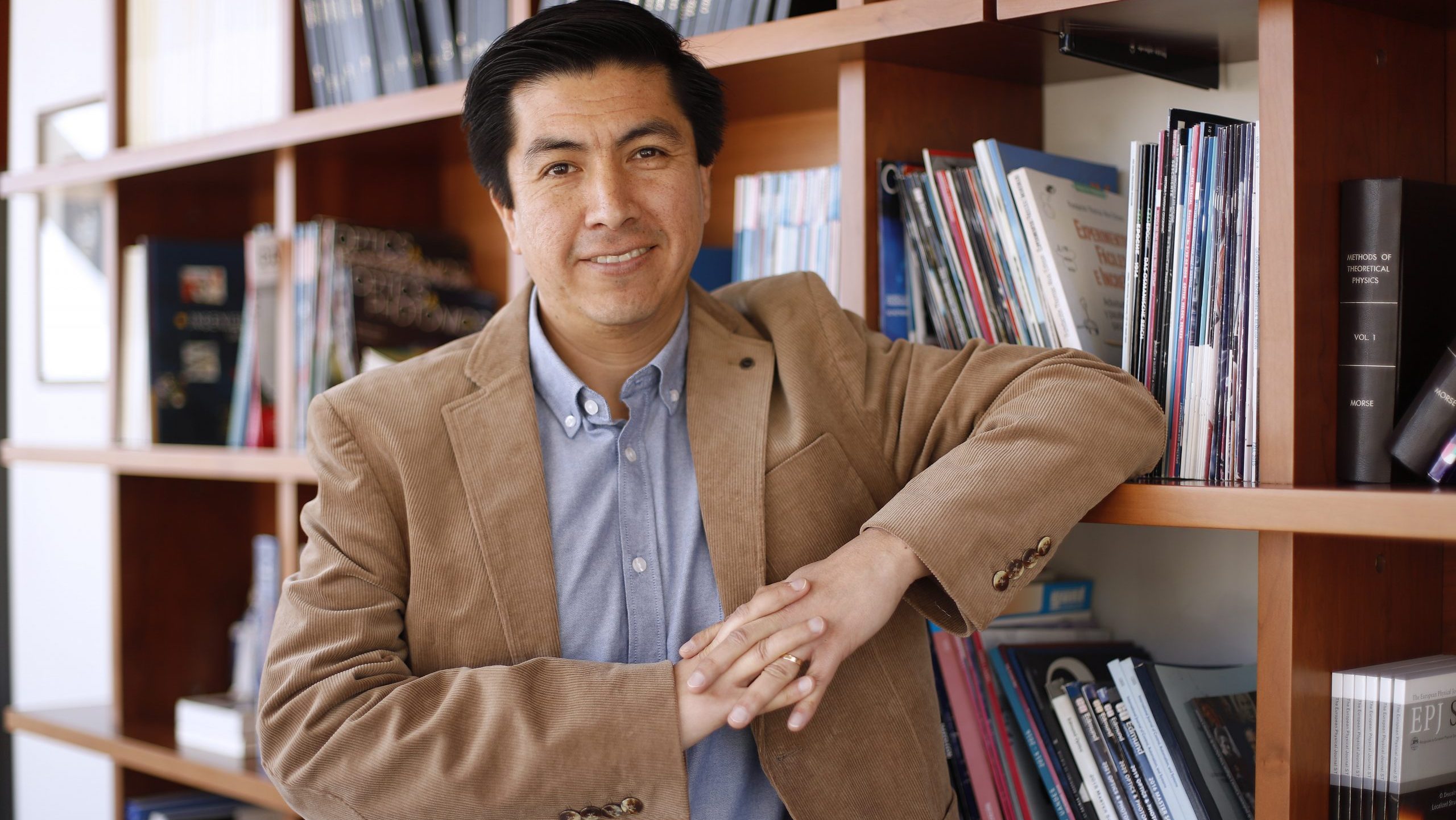
"The world faces a growing problem of groundwater contaminated not only with nitrates, but also with traces of pharmaceuticals, antibiotics, and pesticides that reach the subsoil through agricultural, livestock, and domestic activities," explains César Huiliñir, a researcher and faculty member at the School of Engineering and Applied Sciences.
The project, which was awarded a Fondecyt Regular 2025funding, evaluates a biological process known as autotrophic denitrification, which uses elemental sulfur to remove nitrate from water, while also analyzing its ability to remove emerging contaminants across different treatment systems.
A central aspect of the study is the analysis of potencial environmental effects associated with these processes. "We also study whether the process generates nitrous oxide— a gas that contributes to climate change — and how to reduce its emissions," Huiliñir notes, adding that there is very little scientific information on how pharmaceutical and pesticide residues influence these biological processes, especially regarding the generation of this greenhouse gas.
The researcher's interest in this line of research stems from the growing concern about groundwater quality in Chile and the limitations of current solutions.
"In many locations, especially rural ones, it is not feasible to implement complex or costly technologies," he says. From his experience in water treatment, he identified the need to develop simpler and more sustainable alternatives that not only purify the water, but also minimize adverse side effects on the environment.
"This research can contribute to improving drinking water quality and, therefore, public health, while offering more accessible and sustainable treatment alternatives for rural communities," Huiliñir states regarding the project's broad societal impact.
Furthermore, the results could support the water and sanitation industry in improving current nitrate removal processes and serve as a scientific basis for strengthening public policies and decision-making in water resource management.
The project is developed in collaboration with an interdisciplinary team of co-investigators: Alberto Vergara, School of Engineering and Applied Sciences, UANDES); Jhosané Pagés-Díaz, Universidad de Santiago de Chile; Eduardo Leiva Llantén, Pontificia Universidad Católica de Chile; and Eduardo Leiva González, Universidad Bernardo O'Higgins.
This research is also part of a broader scientific agenda led by Huiliñir, who is currently involved in several national projects funded by ANID and CORFO, focused on water treatment, nutrient removal, the circular economy, and the development of innovative technologies to address current water resource challenges.