
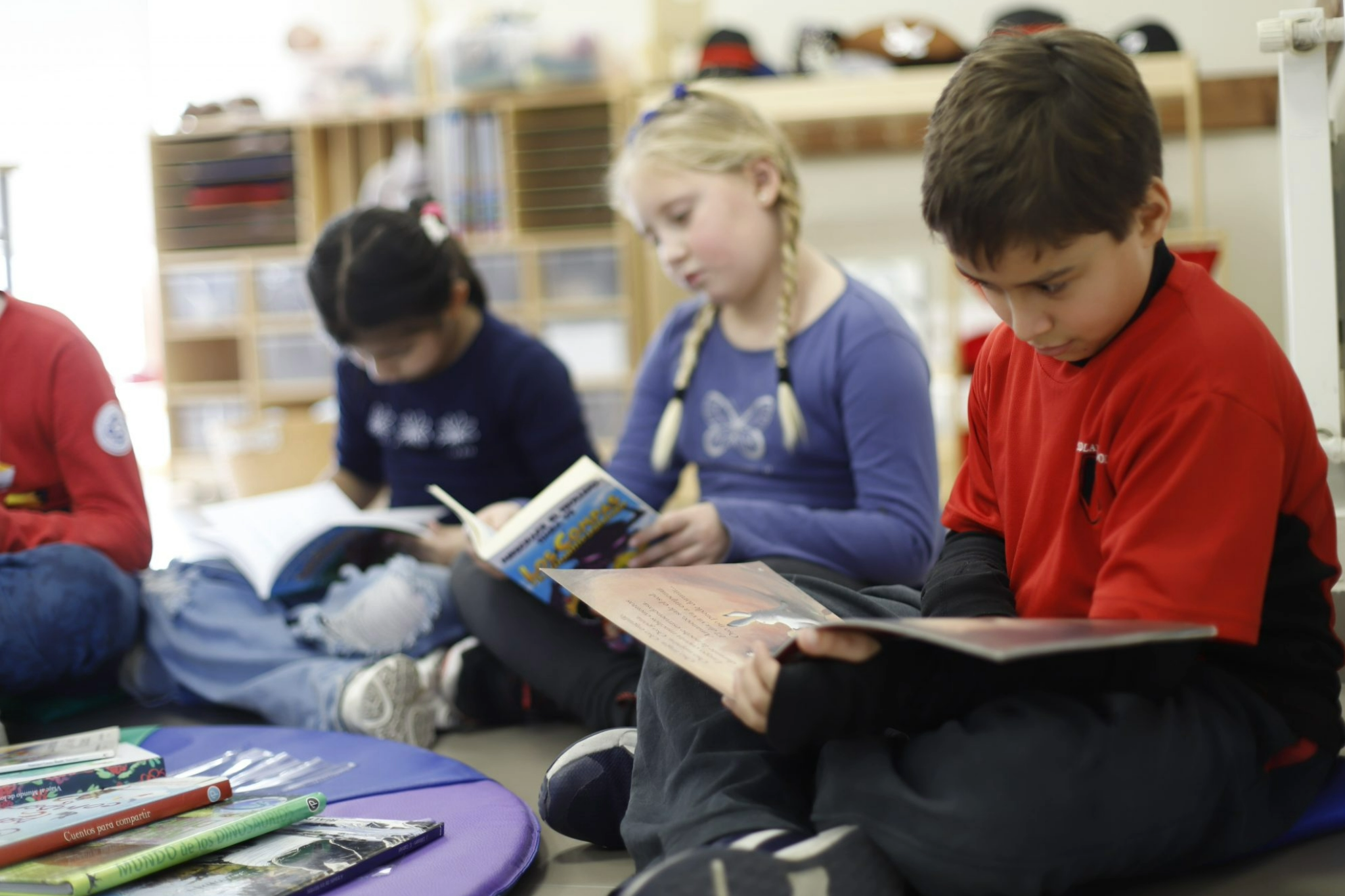
Following the award of the Millennium Institute of Social Sciences 2025 for the MISTRALL project, translational knowledge will be developed to convert scientific evidence from this research into programs, educational materials, and public policy proposals.
The National Agency for Research and Development (ANID) announced last October the awarding of the Millennium Institute of Social Sciences 2025 for the project MISTRALL, an inter-university initiative in which Universidad de los Andes participates. It will develop high-quality research to understand how children learn to read and write, with a special focus on vulnerable contexts.
The project will have a duration of ten years and funding of more than 7,000 million pesos, allocated to fund the work and training of researchers, postdoctoral fellows, students, equipment, and infrastructure.
The MISTRALL project—an acronym for Millennium Institute for the Study of Transformative Literacy and Learning—will bring together teams from the Pontificia Universidad Católica de Chile (PUC), Universidad de los Andes (UANDES), Universidad Diego Portales (UDP), Pontificia Universidad Católica de Valparaíso (PUCV), and Universidad Austral de Chile (UACh). Researcher Susana Claro (PUC) will direct the project, while the alternate director will be María Constanza Errázuriz (UANDES).
Research will range from cognitive abilities that influence language development to longitudinal studies on the role of emotions, socioemotional development, and factors such as self-efficacy and self-concept in learning.
MISTRALL is part of the Millennium Institute Competition in Social Sciences 2025, whose purpose is to strengthen top-tier scientific output and the social impact of research in the country.
Transforming learning through language
The MISTRALL Millennium Institute will study the processes that influence the development of language, reading, and writing in children, integrating cognitive, linguistic, socioemotional, and public policy approaches.
The four lines of research they will address will be:
- Effective interventions in early reading and writing processes, led by Pablo Escobar (PUC) and Pelusa Orellana (UANDES).
- Higher-order cognitive and linguistic processes, led by Katherine Strasser (PUC), David Preiss (PUC), Andrea Bustos (PUCV), and Evelyn Hugo (UDLA).
- Literacy, emotions, and well-being, with the participation of researchers from UANDES, UACh, PUC, UDP, and UDD.
- Public policy for equitable interventions, led by Susana Claro (PUC), Carolina Melo (UANDES), and Marta Quiroga (PUCV).
In addition, MISTRALL will actively develop translational knowledge, seeking to convert the scientific evidence emerging from this research into programs, educational materials, and public policy proposals that can be used in schools, families, and educational settings.
Pelusa Orellana, academic of the School of Education and Director of the Center for Research and Innovation in Reading (CIIL) will be part of MISTRALL together with fellow researcher Carolina Melo—both co-founders of the network Por un Chile que Lee (For a Chile that Reads)—along with Professor Francisca Valenzuela.
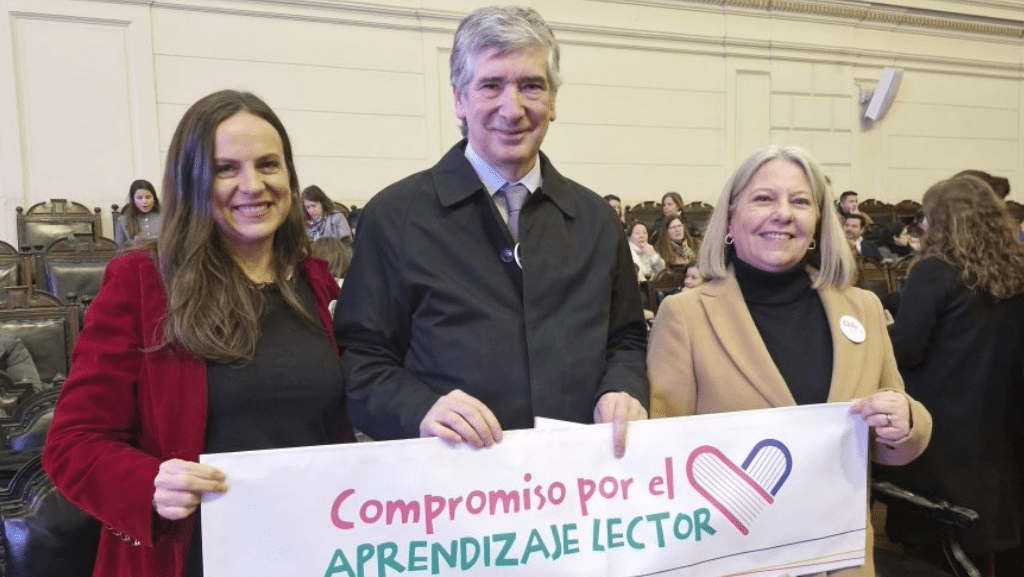
As she explains, the role of UANDES in MISTRALL "is to develop cutting-edge research in the lines in which CIIL researchers Carolina Melo, Constanza Errázuriz, and I are directly involved. In addition, to generate publications and align the work of the Institute with new funds that we can secure for the training of new researchers."
"Undoubtedly, this project is directly linked to the lines of research that I have been developing for the last 20 years, so it is a great opportunity to consolidate my research, especially in relation to the creation and validation of instruments to assess different aspects of reading and writing in the country, as well as effective interventions in the classroom," said Orellana.
She adds that, in her opinion, other lines that MISTRALL will develop, such as public literacy policy and reading motivation, are also relevant, "so I'm very excited."
"I especially value the possibility of training young researchers under the auspices of MISTRALL, which is something our country needs very urgently," says Orellana.
Local response to a regional challenge
According to its researchers, the MISTRALL Millennium Institute arises in a Latin American context marked by gaps in teacher training, inequality, and low prioritization of literacy. For this reason, MISTRALL's location in Chile will make it possible to generate culturally relevant models for low- and middle-income Spanish-speaking countries, helping to solve historical literacy problems.
"The challenge is not only to understand how children learn, but to generate solutions that can be implemented in the territories that need it most," the team emphasized.
The project also includes partnerships with prestigious institutions such as University of Salamanca, University of Canberra, Stanford University, and University of Houston.
In the early years, MISTRALL will produce advanced models of literacy development and transfer this knowledge to society. In the long term, it aspires to consolidate itself as a leading center for the study of children's learning with real impact on schools and educational communities.
In this way, Universidad de los Andes joins the network of excellence of the Millennium Institutes, contributing to a space that will have an impact on the study of child development, education, and equity in learning.