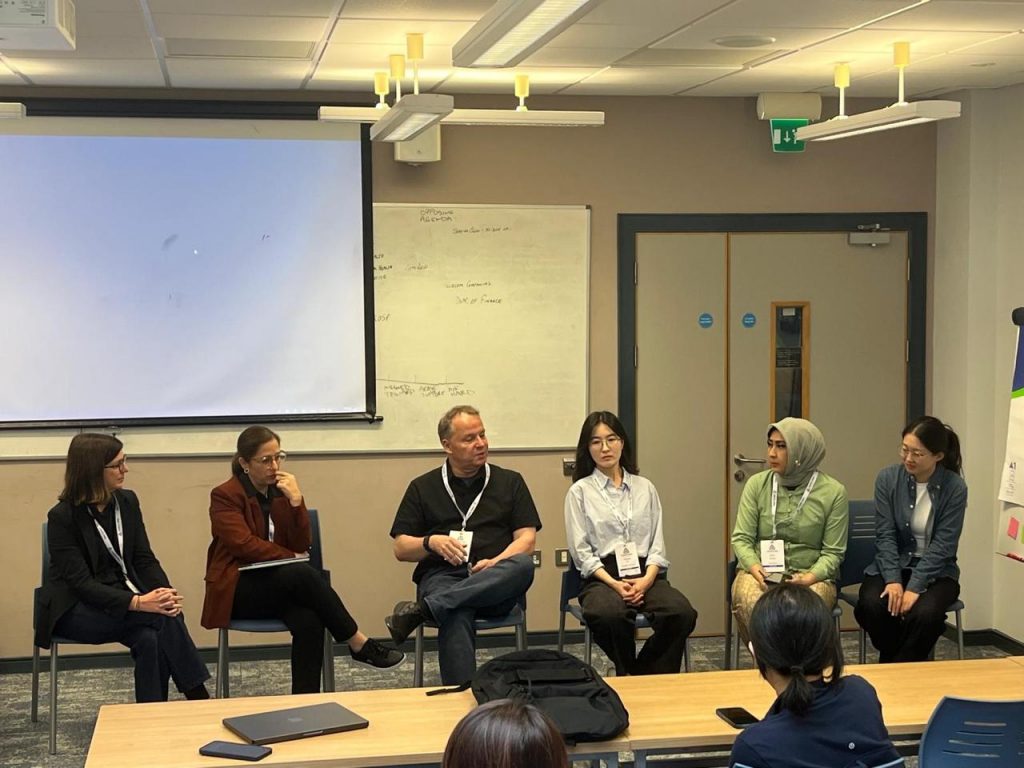
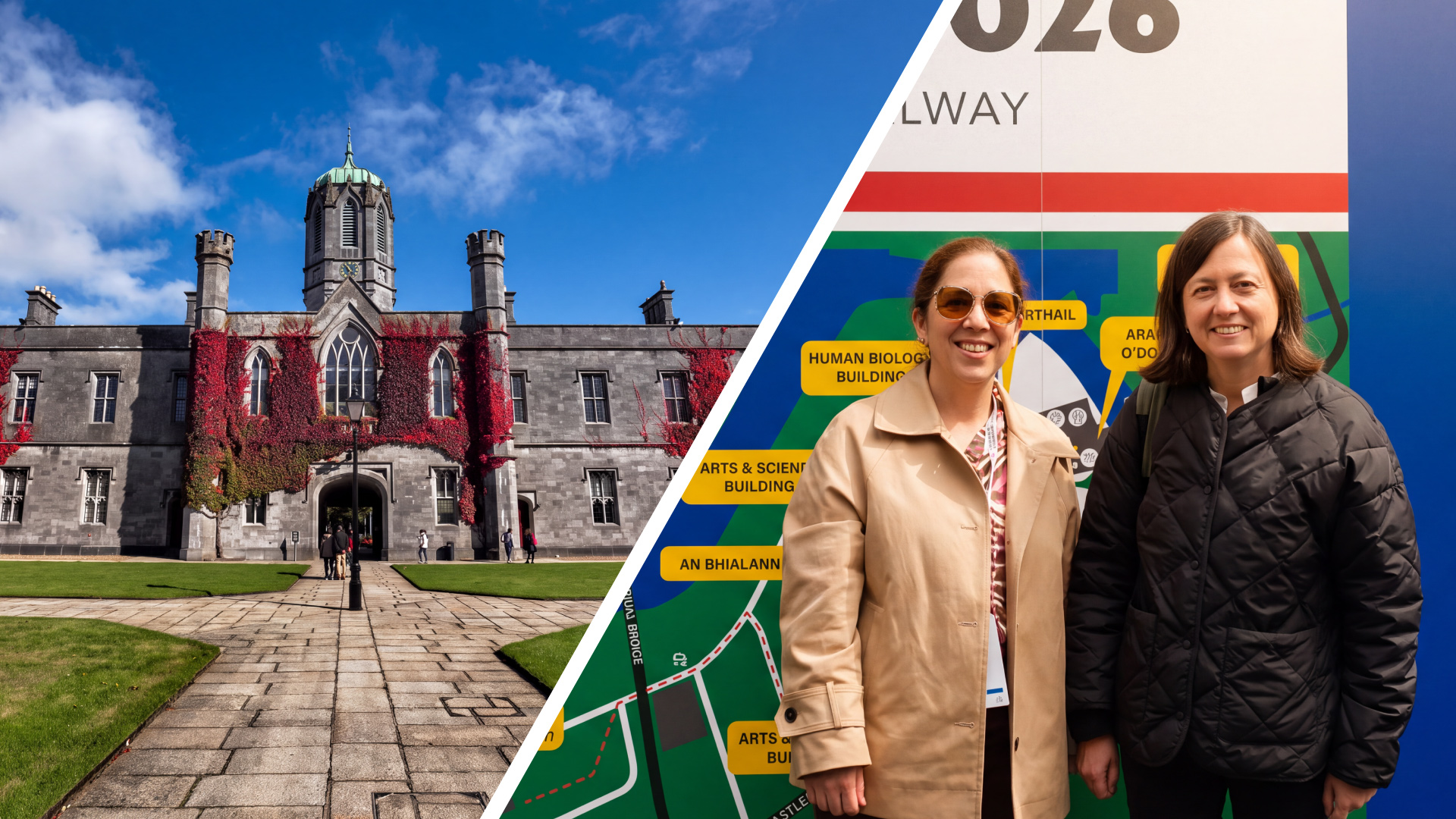
Cecilia Claro and Gabriela Baquerizo, faculty members of the School of Communication, participated in the 2026 annual conference of the International Association for Media and Communication Research (IAMCR), held at the University of Galway in Ireland.
This Social Network Analysis (SNA) study examined how political discourse circulated on X (formerly Twitter) during the first week of official campaign advertising for the 2025 presidential campaign, between September 22 and 28, when the campaign teams for each candidate ramped up their communications efforts. An academic from the School of Communication also participated in the study Guillermo Bustamante.
What did they present?
The researchers tracked the official hashtags of the five candidates with the highest voter support—Jeannette Jara, Evelyn Matthei, Johannes Kaiser, José Antonio Kast, and Franco Parisi—and created five separate “maps” of the conversation, one per candidate, featuring thousands of accounts and their interactions (mentions, retweets, replies).
The central idea is simple: when a conversation is genuine, accounts connect with one another in a crisscross pattern, like a network of friends all talking to each other. But when manipulation occurs, a “star-shaped” pattern emerges: many peripheral accounts that simply forward the message from a central account, without interacting with each other, generating avalanches of retweets but few actual views. This second pattern is the typical hallmark of automated or coordinated accounts.
Key findings:
- Kast's network was the most active, with 25,891 recorded interactions, followed by Jara, with 12,418. In other words, in terms of interaction volume, both candidates dominated the conversation on the platform that week.
- The most striking discovery is that of Evelyn Matthei: Its network showed an “amplification factor” of 6.94 times—a statistically very robust indicator (the study reports a large effect)—suggesting that messages from ordinary citizens were vastly outnumbered by synthetic content, that is, accounts or mechanisms designed to manipulate X’s algorithm and gain artificial visibility.
- The most important finding of the study: This “inorganic saturation”—or artificial inflation of the conversation—is not unique to any one political sector. It appears across the board in the five campaigns analyzed, regardless of their ideological stance. According to the authors, this suggests that the use of artificial amplification is becoming the norm in social media campaigns, rather than an exception or a practice isolated to a single side.
In other words: What users perceive as “popular support” on social media during a presidential campaign does not necessarily reflect actual public support, but rather, to a large extent, a technical battle to dominate the algorithm through artificial amplification—a phenomenon that, according to this study, cuts across the entire Chilean political spectrum.