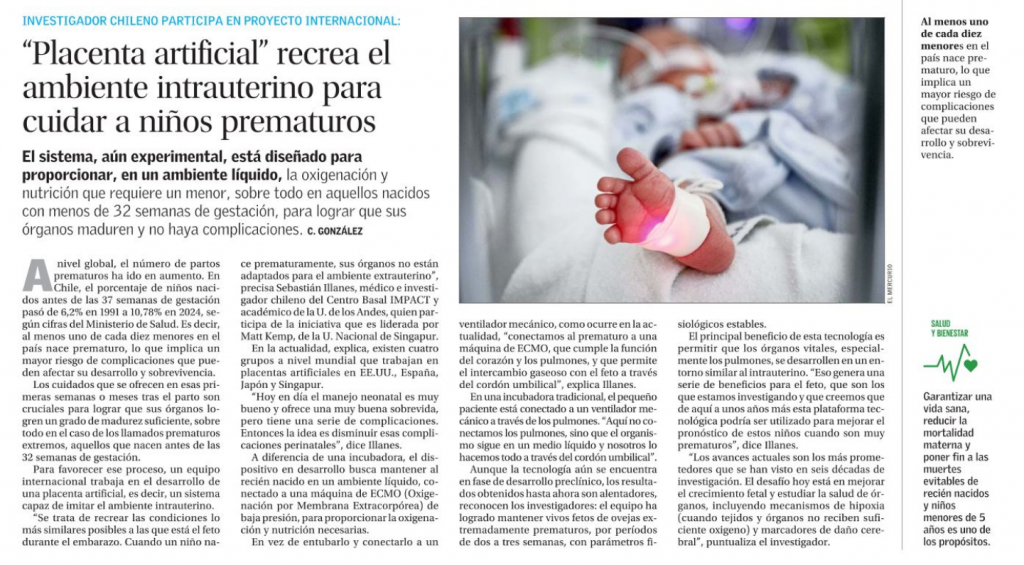
International project involving researchers from Universidad de los Andes seeks to recreate the intrauterine environment and improve the survival of extremely premature newborns.
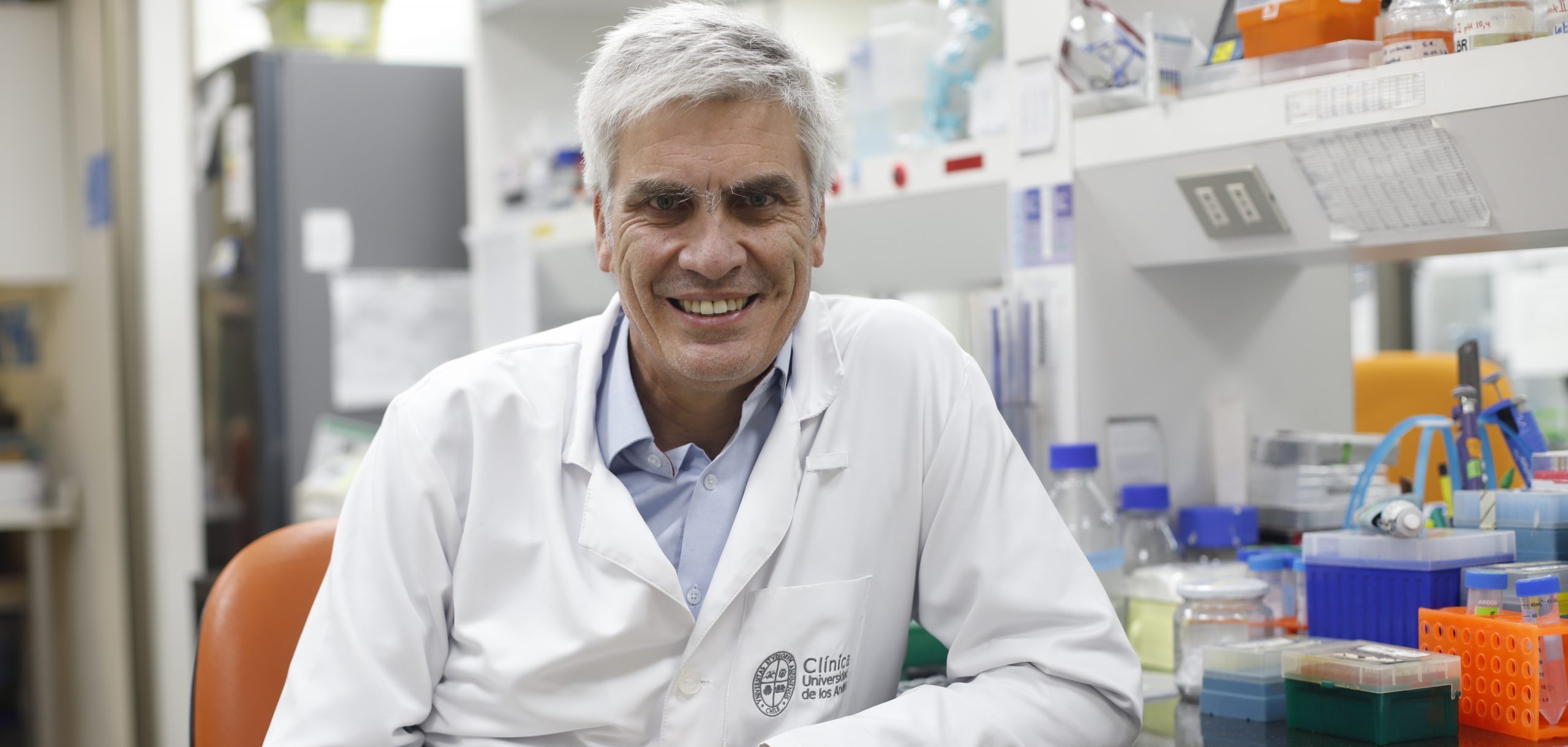
The creation of an artificial placenta to care for extremely premature newborns through a technology that seeks to recreate the conditions of the intrauterine environment is the ambitious project in which Sebastian Illanes, a physician and researcher at the IMPACT Basal Center and academic at the Universidad de los Andes, is involved.
The initiative, which is led by Matthew Kemp of the National University of Singapore, is an international scientific effort focused on offering an alternative to traditional incubation for babies born before 25 weeks of gestation.
In these cases, current methods have high mortality rates and a risk of severe sequelae. However, the artificial placenta keeps the newborn in a liquid environment, with controlled oxygenation and feeding, reducing the physiological stress caused by early exposure to mechanical ventilation in the newborn.
From Chile, the UANDES research team has contributed to the conceptual design, biomedical validation, and clinical analysis of the project.The study has provided preclinical evidence of its potential to improve survival and reduce the complications associated with extreme prematurity in both mother and newborn.
So far, the results obtained indicate that it is possible to sustain the key vital functions of these newborns while pulmonary and neurological development continues outside the mother's womb, under conditions similar to natural ones.
Sebastián Illanes mentioned that the aim of the project is not to "replace pregnancy", but to extend it artificially in situations where premature delivery is inevitable, offering an intermediate therapeutic option between the uterus and the traditional incubator.
The research is still in the experimental and preclinical phase, but its advances position Chile as a relevant player in this emerging field of perinatal medicine. If efficacy and safety are confirmed in future stages, the artificial placenta could represent a significant shift in the management of extreme prematurity and in the chances of survival of the most vulnerable newborns.