
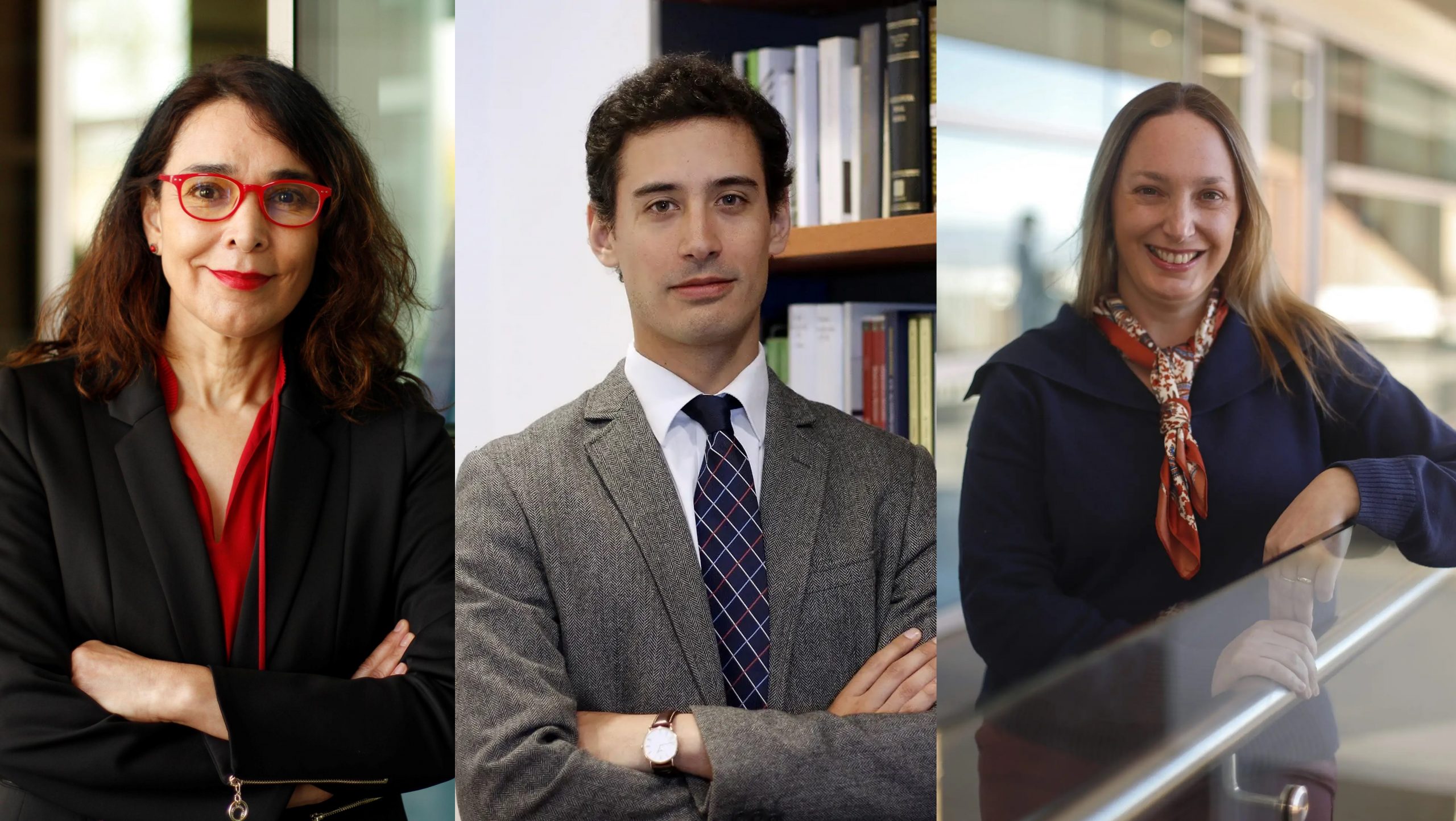
With the objective of serving as a meeting place for researchers, academics, and members of Congress to promote the development of evidence-based legislation, Vincula has become a successful example of UANDES's evidence culture in public policy.
Through the initiative Vincula, the platform that fosters two-way collaboration between the academic world and the Legislature, Universidad de los Andes has played an active role in recent parliamentary discussions on family law and the protection of children and adolescents.
Vincula is a platform that seeks to bridge the gap between those who produce research and those who need it to make evidence-based decisions in Congress.
One of these milestones was the presentation by academic Mar del Rosario Guridi, Ph.D., and professor at the School of Law, before the Senate Committee on Women and Gender Equity , in the context of the bill that seeks to prevent a parent in debt from opposing the departure of his or her children from the country.
The academic addressed the legal implications of the bill, answering questions made during the Committee debate, which were channeled through the legislative team of Senator Carmen Gloria Aravena, reinforcing the value of academic research in the processing of legal initiatives with high social impact.
This participation adds to another recent instance of collaboration between Universidad de los Andes and the Senate facilitated through Vincula.
In early December 2025, legislative advisor Claudio Pimentel, on behalf of Senator Aravena, requested academic support for the analysis of the bill regulating the provision of childcare services, such as daycare centers and after-school programs, which is currently in its second constitutional stage. The request was referred to Professor Rodrigo Guerra, a faculty member at the School of Law.
Professor Guerra then prepared a technical legal report presented to the Senate Committee, focusing on two key aspects of the bill: the constitutionality of the disqualifications from employment associated with alternative sentencing, particularly regarding the presumption of innocence and due process, and the proportionality and duration of such disqualifications.
In his analysis, he proposed limiting these sanctions to the period of conditional suspension and that they cease automatically upon definitive dismissal, so as not to hinder social reintegration.
The report submitted by the researcher was key to the bill's approval in general, as well as serving as a basis for the future drafting of amendments during the committee-stage discussion.
Both cases reflect the concrete impact of Vincula, an initiative that seeks to strengthen legislative decision-making through evidence, technical analysis, and academic expertise.
For Universidad de los Andes Office of the Vice Rector for Research, the participation of its academics in this platform is strategic, as it allows the university to extend its work beyond the classroom, contributing directly to the development of public policies and the improvement of legislation on issues of significant public concern, thereby integrating academic research effectively.
Universidad de los Andes has been actively participating in Vincula since 2022, contributing consistently to the consolidation of this national network, following an invitation from Pontificia Universidad Católica de Chile.
During this period, UANDES has contributed more than 6,600 publications to the Vincula platform, has designated academic ambassadors across various disciplines, and has hosted one of the network's keynote lectures, held in 2024.
That same year, UANDES signed a formal collaboration agreement, strengthening its institutional commitment to knowledge mobilization for the public sector. As part of this, Claudia Brizuela, Director of Research and Doctoral Programs at UANDES , was appointed to the Vincula Steering Committee.
On January 21, 2025, the first meeting of the UANDES Vincula Operating Committee was held, formally launching a new stage of institutional work linking research and the legislative process.
"The year 2025 marked a turning point for Universidad de los Andes in Vincula: not only did we exceed the goal of 100 registered academics, but we also consolidated an internal governance model for knowledge management oriented toward public advocacy. The challenge for 2026 is to move from registration to the active practice of legislative engagement, transforming this critical mass into effective advocacy. Our goal is for the knowledge generated at UANDES to be a relevant and reliable input for decision-making in Congress," Brizuela stated.
"This work is part of the strengthening of UANDES's public research role and the consolidation of Vincula as a key tool for connecting academic knowledge with public policies," concluded Brizuela.