Researchers seek to develop an accessible and accurate diagnostic tool for the early detection of heavy menstrual bleeding, an under-diagnosed condition that affects the quality of life of millions of women worldwide.
The Universidad de los Andes was awarded an ambitious international project financed by Wellcome Leap, a U.S.-based nonprofit organization focused on advancing global health. The initiative, in wich researchers from different universities around the world are participating,was selected within the framework of the call for proposals for " The Missed Vital Sign." The aim is to improve global equity in menstrual health.
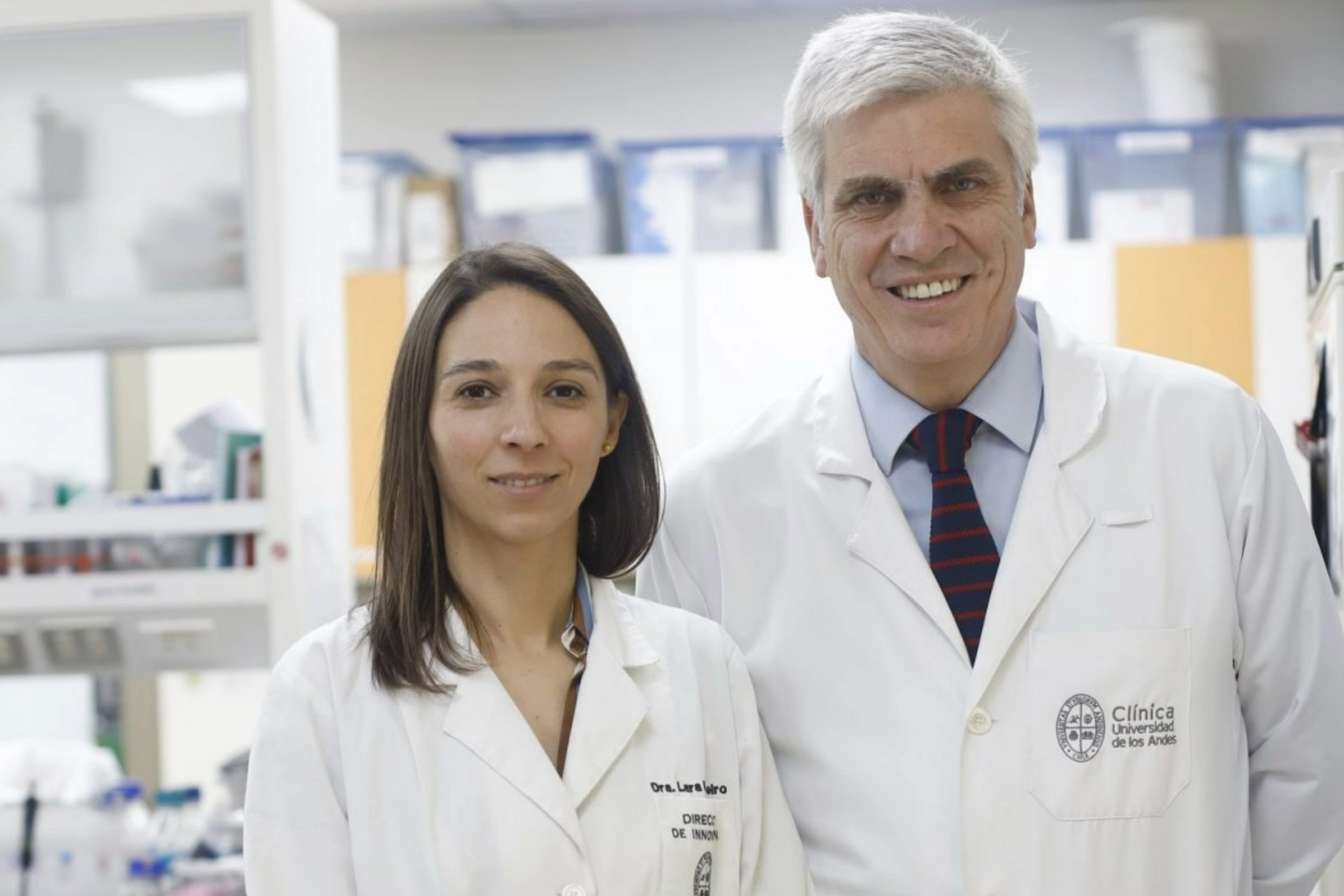
The project, led by Sebastian Illanes as principal investigator and Lara Monteiro as co-principal investigator—both of whom belong to the Laboratory of Reproductive Biology of the Center for Biomedical Research and Innovation (CiiB) at the UANDES School of Medicine—aims is to identify biomarkers in menstrual fluid and develop a scalable diagnostic tool for the early detection of heavy menstrual bleeding, a condition that significantly affects women's quality of life and is one of the main causes of iron deficiency anemia.
The main objective is to develop a high-precision diagnostic tool that allows for the early identification of women with this condition and to redefine ranges of normal menstrual volume in order to establish more precise and specific thresholds for each population to guide better clinical evaluation.
"The study involves the collection of menstrual fluid and blood samples from more than 300 women from five different ethnic groups and will apply multi-omics technologies (proteomics, transcriptomics, genomics, and microbiome). In addition, artificial intelligence and machine learning will be used to create predictive algorithms, and a low-cost, easy-to-use prototype will be validated, such as an app or portable device, designed for contexts without access to specialists," says Monteiro.
The expected impact is significant. The aim is to reduce the diagnosis time—which currently can take up to five years— improve the quality of life of patients through earlier and more personalized treatment and decrease the prevalence of iron-deficiency anemia.The study will also generate robust scientific evidence in historically underrepresented populations, advancing towards greater equity in women's health globally. The study will also generate robust scientific evidence in historically underrepresented populations, advancing towards greater equity in women's health globally.
Finally, the collection of samples in Chile will be carried out at Universidad de los Andes Clinic. The project has the institutional support of the Vice Rector's Office for Research, reflecting the commitment of UANDES to biomedical research of excellence and social impact.
Check here for an opinion column by the researchers highlighting the importance of this research.