The book develops four essential questions: who to educate, what to educate for, who educates, and how to educate. From these questions, the subject, the goal, the agents, and the methods of educating are explored.
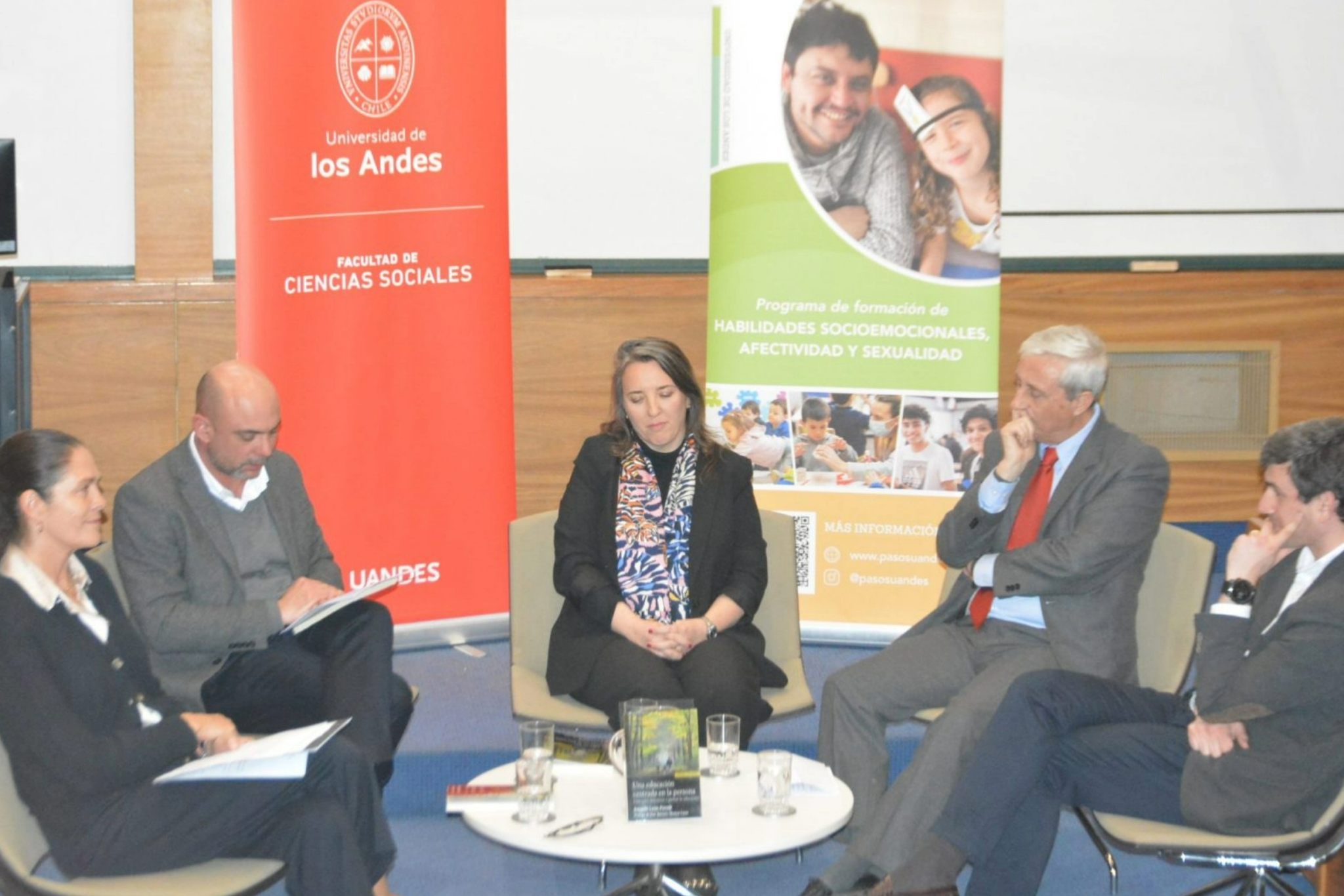
On Thursday, August 28, the School of Social Sciences -through the School of Education and UANDES Steps- presented the book "A Person-Based Education" by academic Joaquín León Parodi. The meeting brought together authorities, academics, school administrators, families, and students interested in deepening their understanding of the fundamentals of education.
The book stems from an urgent question: what does it really mean to educate? In a context in which the focus is usually placed solely on instruction, student learning, and the results of standardized tests, Joaquín León argues that education cannot be reduced to content or behavior. His proposal seeks to recover the deep meaning of the educational task and to base it on the Philosophy of Education, offering a guide for parents, teachers, and educational communities.
The book develops four essential questions: who to educate, what to educate for, who educates, and how to educate. From these, the subject, the goal, the agents, and the methods of educating are explored, all from an anthropological perspective inspired by the classical thought of Aristotle and Thomas Aquinas, continued by Leonardo Polo. Although its basis is philosophical, the language is clear and informative, designed for those who experience education on a daily basis, rather than for specialists.
The presentation included remarks by María José Munita, director of Los Andes School; Matías PetersenDean of the School of Social Sciences at UANDES; and Miguel Arce, Director of Educational Project Development at the Nocedal Foundation, who discussed the book's relevance to the current challenges facing schools and families was discussed.