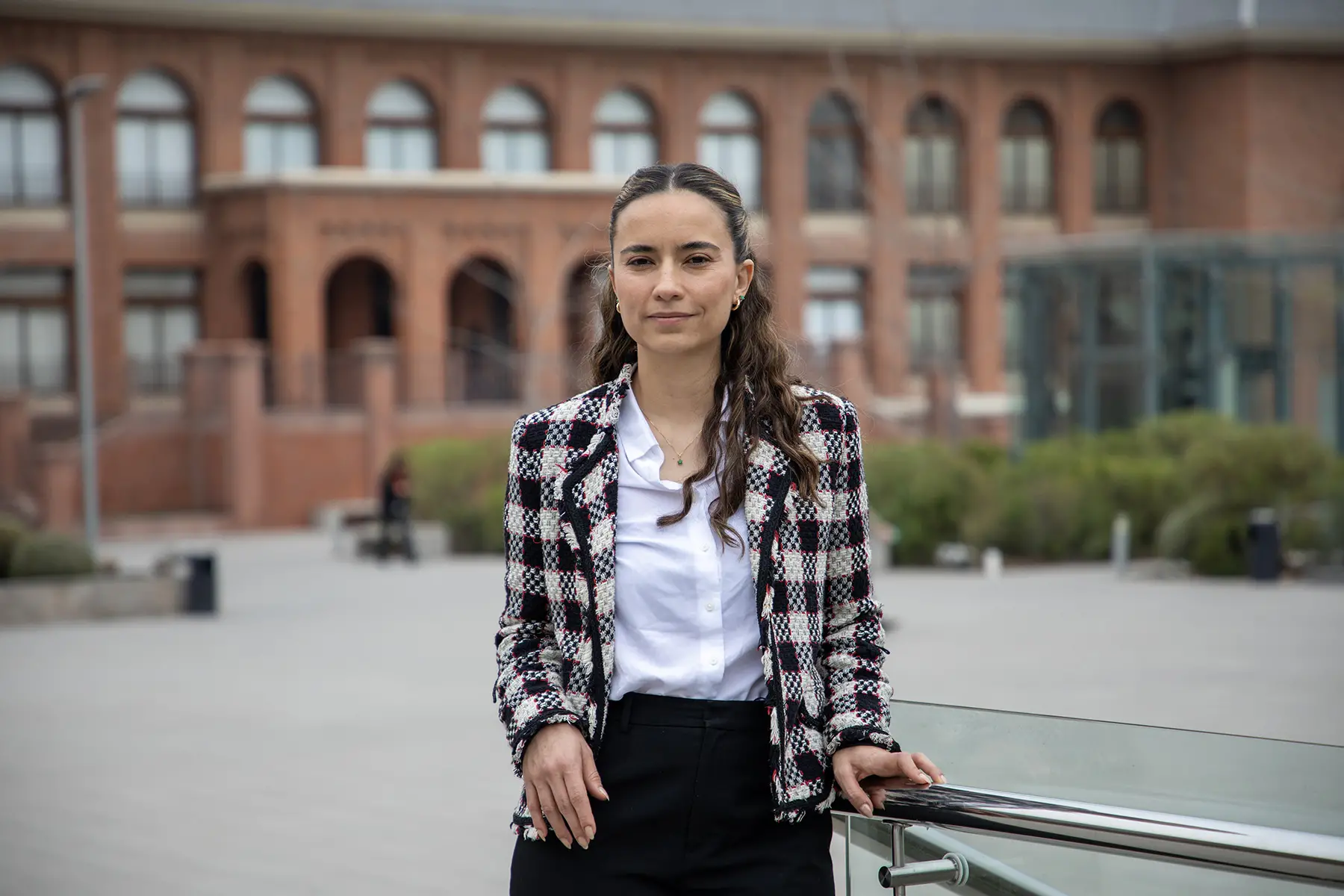
Isabela Munévar, a researcher at the School of Economics and Business Administration, analyzes the impact of the "walking school bus" system developed in Bogotá (Colombia) and also the use of public resources in Chilean education.
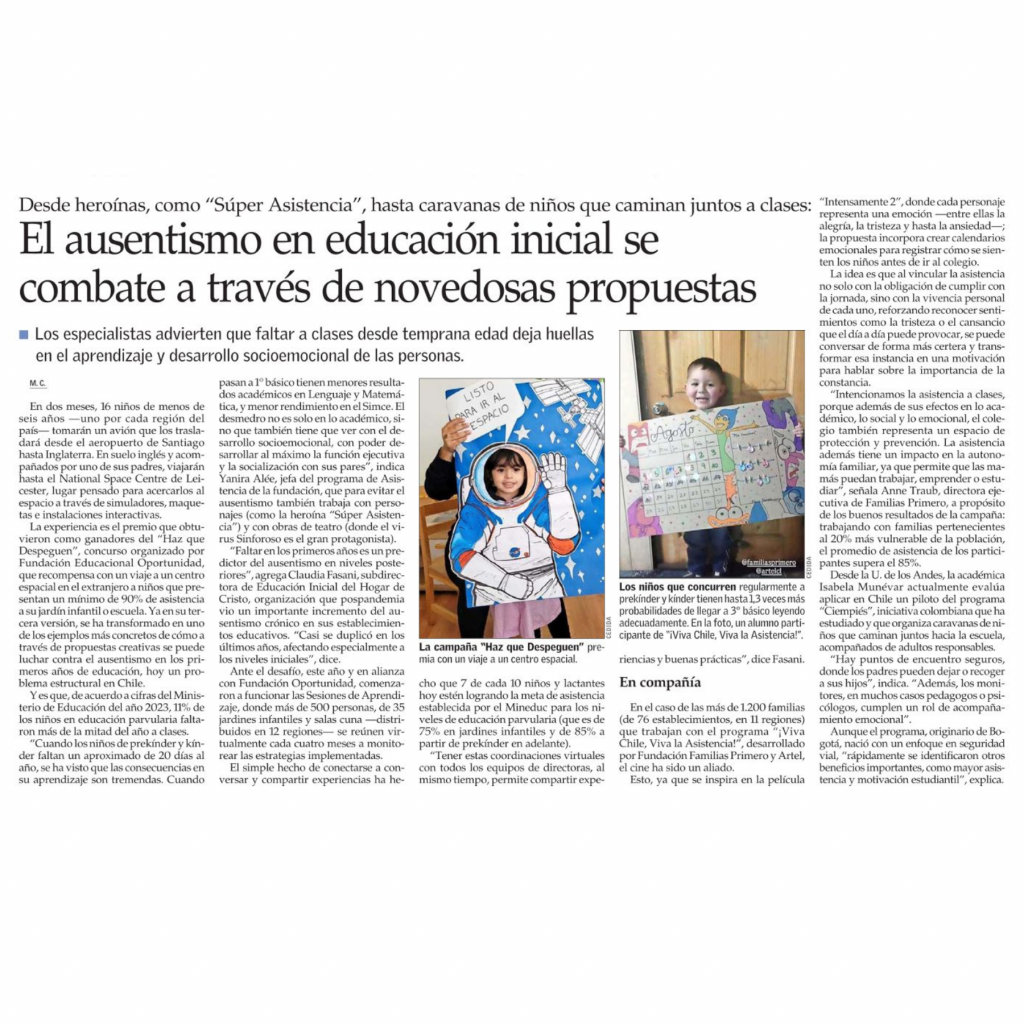
The academic from the School of Economics and Business Administration, Isabela Munévar, leads several research projects that seek to provide concrete evidence to design more equitable and effective educational policies in the region. One of her most important projects (El Mercurio) is the evaluation of the program "Centipede"program. The initiative organizes caravans of children who walk together to school accompanied by responsible adults.
Her work combines administrative data with interviews with local stakeholders.The results are convincing: two years after its implementation, the program reduced by 7.7 percentage points the probability of children changing schools and by 10.6 points the probability of droping out, which is equivalent to reductions of more than 45% with respect to the initial rates. Improvements were also observed in grade repetition and dropout rates.
"Ciempiés is a simple, community-based intervention, but with the potential to impact complex problems, such as dropout and child safety. In addition, it can alleviate the burden of care that falls on parents, particularly mothers, freeing up time for work or educational activities," explains Munévar. This project is supported by the Secretariat of Education of Bogotá, Universidad de los Andes (Colombia) and Harvard University (United States).
At the same time, the researcher is developing a study on school financing in Chile, financed by the Inter-American Development Bank (IDB).The report analyzes how public resources are allocated and used in schools and what type of spending - on teachers' salaries, infrastructure, or pedagogical support - generates the greatest returns in terms of learning and equity. "It's not just about how much is invested in education, but how it is spent and what are the real effects on educational quality are," she says. She adds that her interest in this topic has motivated her to understand how conditions outside the classroom affect educational trajectories. "Safety on the way to school or the way school resources are distributed can make the difference between staying in the system or dropping out," she details.
In the research on school financing in Chile, Munévar works together with Julio Rodríguez (University of Oxford, England) and with specialists from the IDB. And in the case of the Ciempiés program, she collaborates with Rafael Hernández (Universität Zürich, Switzerland) and Oscar Díaz (Paris School of Economics, France).
In addition to these projects, Munévar has researched the role of Catholic schools in Chile in social mobility and is also participating in a comprehensive diagnosis of the Colombian educational system together with Asim Khwaja, director of the Center for International Development at the Harvard Kennedy School (United States). "The idea is that this project will serve as a starting point for the development of several additional projects that will help to address the country's educational challenges," she concludes.